The Basic Sailing Knots
Knots are essential even today in sailing. Whether you want to moor your boat properly, or tie a sail when reefing, you must skill the basics of knotting. Fortunately, with a few basic knots you can get pretty far. I teach you coiling, tying halyards and the basic three knots every sailor must know.
These three knots must be managed in different situations and on different type ropes, always as as fast and reliable.
The Best knots fulfill these requirements:
- They are fast to tie,
- They are secure and strong, keeping always their place,
- They are easy to open, even under load and tension. The knot must not be get stuck or piled up.
- The knot must not reduce the strength of the rope significantly. If the rope fails and cuts in half, it is just where knots and bends have damaged the rope’s structure. A knot will always reduce the rope’s strength. Never leave unneeded knots in any ropes.
When a knot meet these requirements, that is a good knot and can be used in sailing.
The basic knots, as any knot, can be modified into way better ones where they hold better, are faster to open or damages less the rope’s structure. However, when there are many people on board, simplicity is key, which why these basic knots are the ones to use in most cases. Modifications may make the knot better, but if your fellow mates cannot manage them as well as you can, they bring a risk in use. I teach you on board Fareata how you can learn and manage and use these knots and their modifications in any situation. Learn these well before stepping on board and you make impress the crew on any vessel.
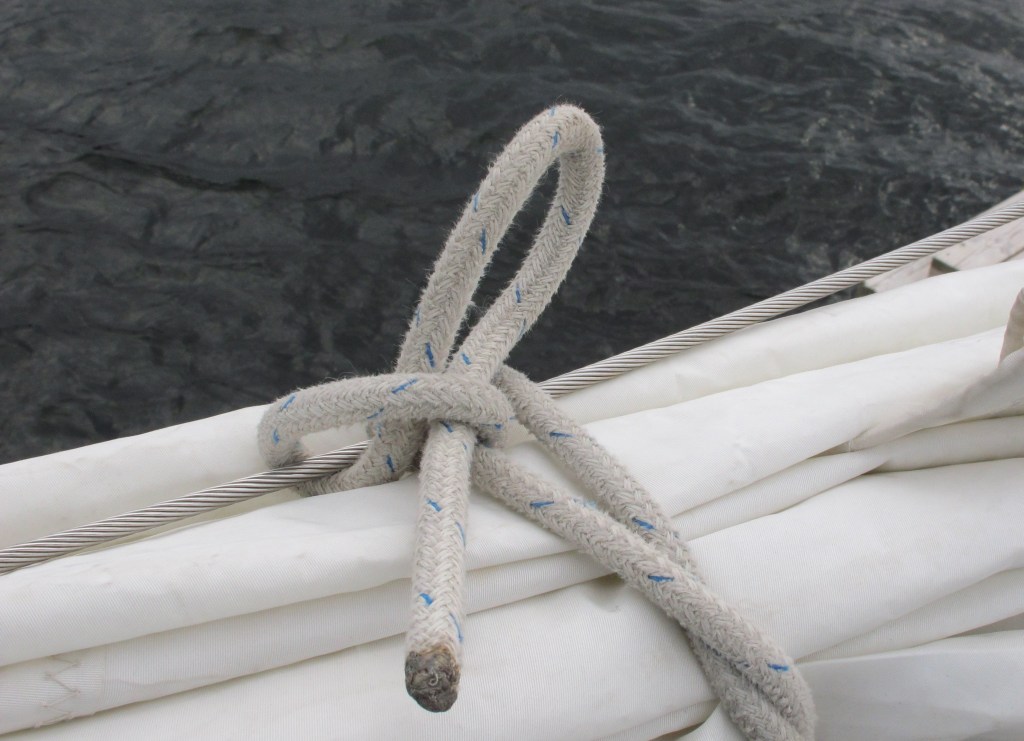
The Three basic Knots
Videos: ( ENGLISH available now! )
Figure 8
Figure eight is a knot to tie at the end of the rope. You need to tie it at the end of every halyard and any rope attached to a mast or sails. That is important safety measure to prevent to loose the rope completely inside a mast mistakely). If you need a thicker knot, tie the Figure Eight doubled.
FIGURE EIGHT KNOT
–
Clove Hitch
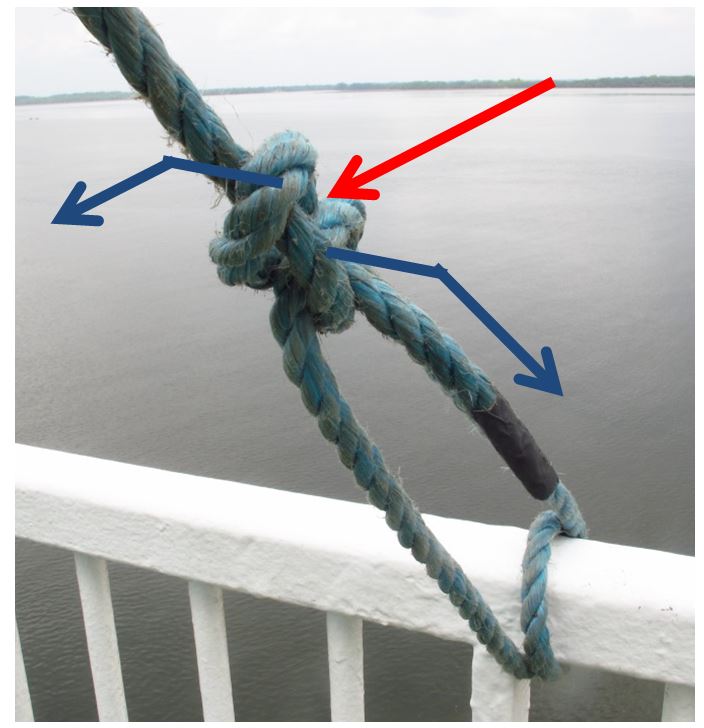
Clove Hitch is a light knot used to tie a rope to a bar, horizontal or vertical. Use it to tie fenders on side of the boat (fender = the soft balls between boats and dock). However, this knot can get stuck, or get loose and drop off when there’s uneven pulling in the rope. Therefore, clove hitch should be secured with one or two hitches over itself, and the loose end always left next to the standing part (to prevent slipping).
CLOVE HITCH
–
Bow line
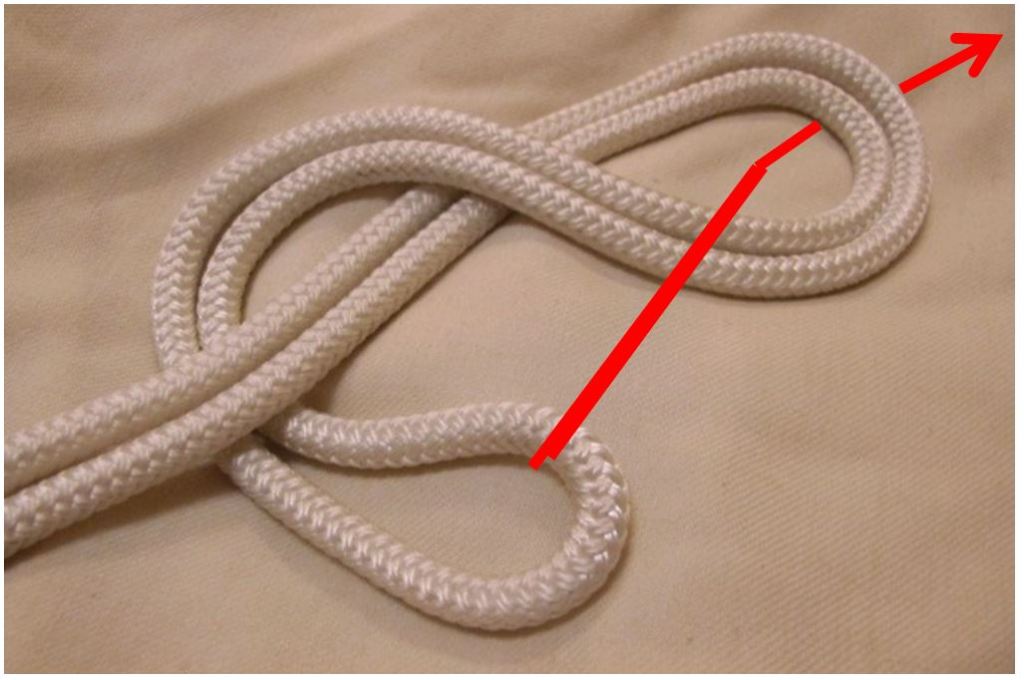
Bow line is referred as the king of knots. This knot can be used to tie sheets to sails. However, avoid using in mooring lines or when you need the rope keep it’s full strength. This knot reduces the strength of a rope up to 40 %. This knot is still very realiable and it doesn open by mistake easily. Leave some room on the loose end.
Besides the loss of strength in the rope, one of the biggest flaws this knot bings is that you cannot open it when the rope is under tension. Therefore, I personally avoid always using this knot on a mooring line. If you do know how to open this knot, you can open it always when there’s no pull in the rope, even when the knot feels stuck. See the instructions at the video.
BOW LINE KNOT
–
Coiling
All the loose ropes on deck must be stowed away secured when not in use. Proper coiling ensures that your ropes are always tidy and ready to use. Poor coiling may lead to hazardous situations. Get the tips for neat coils in the video. PS. Whenever opening a coil, always run the rope through your hand before using the rope. This ensures there’s no twists left on the rope from the coil.
COILING
–
Cleat hitch
Cleat hitch is used in halyards and in mooring ropes, whenever the rope must be tied in a cleat. In this video, I show how to tie a cleat hitch in a halyard by the mast.
CLEAT HITCH
–
How to tie sails
How to tie sails – the fast and the proper way.
–
Sources for more great knots
Lighterman’s hitch – this knot goes excellent for tying a boat or vessel using only one bollard. This is commonly used in traditional gaff vessels. This knot is as realiable as cleat hitch, and it can be opened as easily — in the end, this is just a version of the same knot for a single bollard.
Fisherman’s bend – one of the best knots for tying two ropes together. Easy to learn.
Monkey fist ENG – used at the end of a heaving line.
Animatedknots.com shows more handy knots for additional use.
The Maritime School Ultimate Challenge: 10 knots under 4 minutes eyes closed (only for members)
–
Join Deckhand Mentoring Program!
You get regular checks, tasks, videos and up-dates to learn sailing. It’s 1:1 exclusive training. Daily chatting support for any sailing matters. Because I’m better at sailing than Chat-GPT. I’m the ultimate Chat-Sail-Jasper. You learn anything all about sailing 😉
Mentoring Main page (members only)
The next lesson (Sailing Dictionary) —-> (members only)

–
 Art Sail Training